
Extractions and Dentoalveolar Surgery
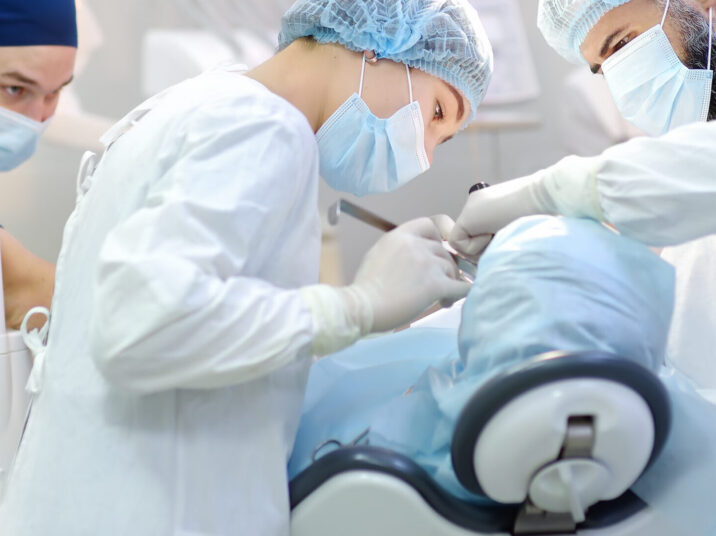
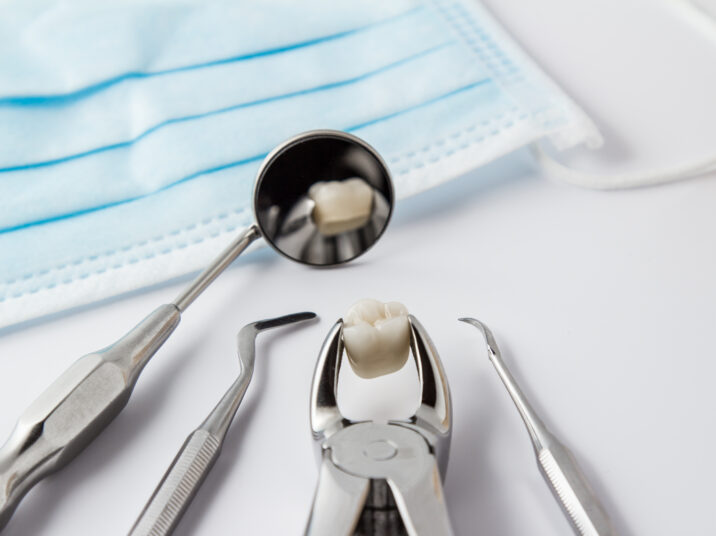
The surgical management of soft and hard tissues is at the core of what oral and maxillofacial surgeons are trained to do. Dentoalveolar surgeries are ones that involve the alveolar bone and the supporting structures. This can include removal of impacted teeth (such as wisdom teeth), bone grafting (in preparation for dental implants), removal of cysts or tumors in the jaw, and support for orthodontic treatment.
Dentoalveolar procedures are best performed by oral and maxillofacial surgeons, the experts in face, mouth and jaw surgery, and can include:
Apicoectomy
While most root canals are successful, there are times when a root canal alone isn’t sufficient. If the infection from the dead nerve inside a tooth spreads beyond the tooth root and into the surrounding bone, your dentist may refer you to an oral and maxillofacial surgeon for an apicoectomy. During an apicoectomy, the surgeon removes the infected portion of the tooth’s root in order to clean the infection from the tooth and surrounding bone and then fills the root to prevent future infections.
Crown-lengthening Procedures
Before placing a crown on a tooth that has been weakened by decay or is cracked, broken or severely worn down, your dentist may refer you to an oral and maxillofacial surgeon for a crown-lengthening procedure to ensure that enough of the tooth’s structure is available to securely hold a crown.
Dental Hemisection and Root Amputation
After a root canal, if one or more of the tooth’s roots becomes infected – or there is significant bone loss around the tooth – your dentist may refer you to an oral and maxillofacial surgeon for a hemisection or root amputation. During a hemisection, your surgeon removes one half of the tooth, leaving a serviceable one-rooted tooth. The term root amputation refers to the surgical removal of one root of a tooth with multiple roots.
Trigeminal Nerve Repair
The trigeminal nerve, which is responsible for sensation in the face and such functions as biting and chewing, may be at risk for injury during some oral and maxillofacial surgical procedures. OMSs are able to diagnose and manage these injuries with both non-surgical and surgical treatments to restore sensation and function.