
Distraction Osteogenesis: Correction of Jaw and Facial Deformities
What is Distraction Osteogenesis?
Distraction osteogenesis is a surgical technique used to correct craniofacial anomalies by making a longer bone out of a shorter one. Conditions distraction osteogenesis is used to treat include mandibular hypoplasia; midface hypoplasia; craniosynostosis; Pierre Robin sequence; Apert, Crouzon, Pfeiffer syndromes; and cleft lip and palate.
In this procedure, bone segments are gradually lengthened or repositioned to achieve proper alignment and improve symmetry across the face. Distraction osteogenesis stimulates new bone formation in the resulting gap, providing a more balanced and functional facial structure.
How Does Distraction Osteogenesis Work?
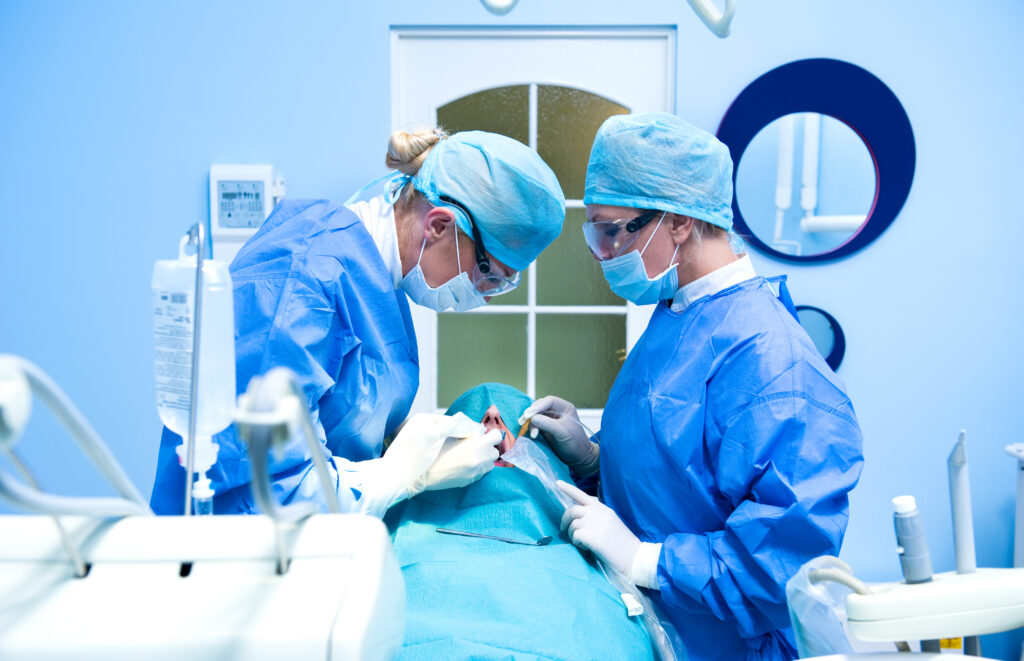
- Surgical placement: An oral and maxillofacial surgeon (OMS) carefully cuts the bone in the targeted area to create a controlled fracture. Metal plates – called distractors – are then attached to either side of the fracture to provide stability during the distraction process.
- Gradual distraction: After surgery, the distractors are activated, gently separating the bone segments with slight tension. This controlled movement stimulates the body’s natural healing response, allowing new bone and gums to form in the gap. Screws on the distractor may have to be turned every day to keep tension and move the affected face bones.
- Consolidation phase: When the desired bone length or position is achieved, the distraction device is left in place (but no longer adjusted) to strengthen the bone. During this stage, the newly formed bone hardens and becomes stronger. This process can take about one to two months.
- Device removal: Once the bone has set, the distraction device is removed via another surgery. The bone and surrounding tissues continue to mature to ensure long-term stability and functionality.
What are the Benefits of Distraction Osteogenesis?
- Correction of facial deformities: Distraction osteogenesis can be highly effective in correcting facial and jaw deformities. It can improve facial esthetics, restore normal jaw function and improve speaking and chewing skills.
- Less invasive procedure: Distraction osteogenesis is considered less invasive than conventional corrective surgery. It can be a smaller incision with less trauma to the tissues.
- Improved stability: A gradual distraction process promotes bone formation and healing. Newly formed bone is often more stable and less likely to relapse, making it a suitable foundation for future dental implants.
- Alternative to bone grafting: In some cases, distraction osteogenesis can eliminate the need for extensive bone grafting, as the procedure gradually forms new bone instead of taking bone grafts from another site.
Multidisciplinary Team Approach
Distraction osteogenesis is a complex procedure that requires the expertise of an OMS and a multidisciplinary team. Your OMS may work with an orthodontist, a speech pathologist and other specialists to ensure comprehensive care and optimal results.
If you or your child has a jaw or facial deformity, it is important to consult an OMS who is experienced in distraction osteogenesis. The OMS will assess the condition, explain the procedure, discuss potential risks and benefits and develop a customized treatment plan.